
Ecommerce AI Tools: The Complete 2026 Guide
Ecommerce AI tools have moved from novelty to infrastructure. Two years ago, most sellers experimented with one or two — usually a copywriting assistant and an image generator. In 2026, the sellers growing fastest run an entire stack of ecommerce AI tools, each tuned to a specific part of the workflow: finding products, creating visuals, writing listings, running ads, answering customers and reading the numbers.
This guide explains what ecommerce AI tools are, the ten categories that actually move revenue, how to assemble a stack by budget and store size, and where AI is taking online selling over the next 12 months.
What Are Ecommerce AI Tools?
Ecommerce AI tools are software products that use AI — large language models, image models, forecasting models, agents — to automate or accelerate tasks that online sellers used to do manually. The key shift in 2026 is that the best tools are no longer generic AI wrappers. They are built specifically for commerce workflows, trained on product data, listing data and ad data, and integrated with platforms like Amazon, Shopify and TikTok Shop.
The result is that a task that used to take an afternoon — say, writing ten localized listings, or producing a set of product photos for a new SKU — now takes minutes.
The Ten Categories That Move Revenue
FlowCay groups ecommerce AI tools into the categories below. Each one maps to a real cost or revenue lever in your store. We’ve listed representative tools and the selection criteria that actually matter when you evaluate them.
1. Product Research
AI product research tools scan millions of products across marketplaces to surface demand, estimate sales and flag competition before you commit inventory. This is the category with the clearest ROI, because a single bad product pick can cost more than a year of tool subscriptions.
Top tools: Jungle Scout, Helium 10, SellerSprite, FindNiche, AMZScout.
How to choose: prioritize tools with verifiable sales-velocity data, monthly updated databases, and a refund/credit policy for inaccurate estimates. If you sell cross-border, check that the tool covers your target marketplaces.
Explore AI Product Selection tools.
2. Design & Product Photography
Product images convert. AI design tools generate studio-quality product photos from a single raw shot, remove backgrounds, place products in lifestyle scenes and produce ad creative at scale — without a photo shoot.
Top tools: Mokker AI, 3wanai, PixPix, Gaoding, Leonardo.Ai.
How to choose: the best output depends on your input photo quality — shoot well-lit, sharp product shots on a plain background, then let the AI handle the scene. Look for batch workflows if you have many SKUs.
Explore AI Design tools. For a deeper comparison, see our roundup of the best AI product photography tools.
3. Marketing & Advertising
AI marketing tools generate ad creative, write copy tuned to each platform, optimize bids and schedule social posts. For sellers running paid traffic, this category often pays for itself within the first month through lower cost per click and higher conversion.
Top tools: Pencil, QuickCEP, Thunderbit, plus platform-native AI assistants in Meta Ads Manager and Google Ads.
How to choose: the winning AI ad tools learn from your own performance data — feed them historical ad spend and conversion data so the model understands what worked before. Avoid tools that only generate creative without a feedback loop.
Explore AI Marketing tools.
4. Copywriting & Listings
AI copywriting tools write titles, bullet points, descriptions and emails that cover the keywords buyers actually search. The best ones understand platform rules — Amazon’s title length limits, Shopify’s SEO patterns, TikTok’s hook-first style.
Top tools: CopyMonkey, plus general LLMs (Claude, ChatGPT) with the right prompt scaffolding.
How to choose: a great listing tool knows each platform’s character limits and prohibited phrases, and tests keyword coverage against the search results you’d actually compete against.
Explore AI Copywriting & Chat tools.
5. Customer Service
AI customer service tools answer buyer questions, handle returns and follow up on orders 24/7. For cross-border sellers, the multilingual ones are especially valuable — they reply in the buyer’s language without you hiring a translator.
Top tools: Gorgias, Tidio, QuickCEP.
How to choose: the best ecommerce AI support tools integrate with your order system so the agent can edit orders, issue refunds and update tracking inside the conversation. A chatbot that doesn’t know your order data is just a FAQ page.
Explore AI Customer Service tools.
6. Analytics
AI analytics tools turn your sales, ad and inventory data into plain-English explanations of what’s happening and what to do next — replacing dashboards you have to interpret with answers you can act on.
Top tools: Daasity, plus AI features inside Shopify Analytics and Amazon Brand Analytics.
How to choose: prioritize tools that surface anomalies and recommended actions, not just prettier charts. The best ones learn your baselines and alert when something drifts.
Explore AI Analytics tools.
7. Video & Livestream
Short video and livestream commerce drove a huge share of ecommerce growth in the last two years. AI video tools turn a product image into a shoppable clip, generate avatars for livestreams and cut long-form video into platform-ready shorts.
Top tools: the ecosystem is broad — from agent skills like 1Click Ecom Detailpage for product videos, to AI avatar platforms for livestreams.
How to choose: match the tool to the platform’s content format. TikTok and Instagram Reels reward fast-cut, hook-first edits; YouTube and Amazon Live allow longer formats. A general-purpose AI video tool is fine; a platform-tuned one converts better.
Explore Video & Livestream tools.
8. Localization & Translation
If you sell across more than one country, AI localization tools translate listings, ads and support replies while keeping them natural in each language — far better than old-style machine translation.
How to choose: look for tools that understand ecommerce vocabulary (sizes, materials, sizing systems) and that let you lock brand-voice terms so they don’t drift across translations.
Explore AI Localization tools.
9. Logistics & Supply Chain
AI logistics tools forecast demand, optimize inventory across warehouses and flag supply chain risk. For sellers scaling past a single marketplace, this category prevents the stockouts and overstock that quietly destroy margin.
Top tools: Eccang, Dianxiaomi.
How to choose: the best logistics AI plugs into all your sales channels and shipping carriers, so forecasts factor in lead times across regions.
Explore AI Logistics tools.
10. Independent Stores
If you run your own storefront instead of (or alongside) a marketplace, AI store builders and growth tools help you launch and scale without a dev team.
Top tools: Shopify, Shoplazza, Nosto for personalization, Rebuy for merchandising.
Explore Independent Store tools.
Build Your Stack by Budget
A stack for every budget, ordered by impact:
| Tier | Monthly budget | Stack |
|---|---|---|
| Starter ($0–50) | Just starting | ChatGPT/Claude for copywriting + Leonardo.Ai free tier for images + one marketplace research free trial |
| Growth ($50–300) | Scaling | One product research tool (Jungle Scout or Helium 10) + CopyMonkey + Mokker AI + Klaviyo starter |
| Scale ($300–1000) | Multi-channel | Research + design + copywriting + email (Klaviyo) + support (Gorgias) + one analytics tool |
| Enterprise ($1000+) | Multi-marketplace, multi-region | Full research + design + marketing + support + analytics + localization + logistics stack |
The mistake to avoid is buying ten tools at once and using none of them well. A stack of three tools you use daily beats a stack of fifteen you abandoned after a week.
Ecommerce AI Tools by Marketplace
Different marketplaces reward different tools:
- Amazon sellers benefit most from research, listing and keyword tools. See our best AI tools for Amazon sellers.
- Shopify sellers benefit from design, email and conversion tools. See best Shopify AI tools.
- TikTok Shop sellers benefit from video, creator and livestream tools.
- Cross-border sellers benefit from localization and multilingual customer service. See AI tools for cross-border ecommerce.
Match the tool category to where your revenue actually comes from.
How FlowCay Curates
Every tool on FlowCay goes through a manual review before listing: we check the homepage, verify what it claims it can do, place it in the right category and tag the right pricing and integration details. We re-check listings regularly and retire tools that go offline or pivot away from ecommerce. Our editorial standards are independent — paid placements never influence which tools we recommend.
2026 Trends to Watch
Three shifts to plan for in the next 12 months:
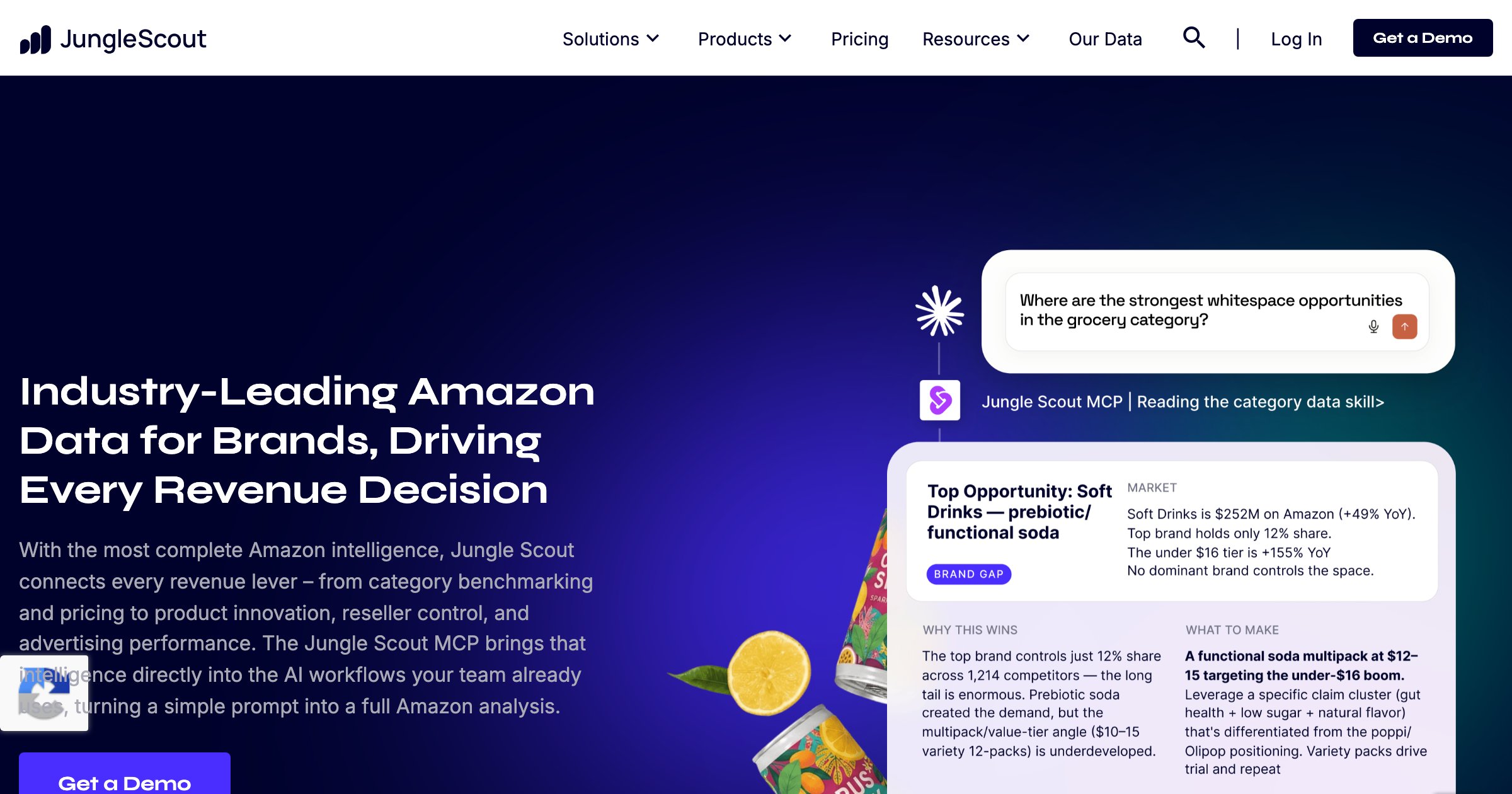
- AI agents replace tool dashboards. Instead of logging into ten apps, you’ll ask one agent in plain English — and it’ll run the workflow across the tools. The MCP (Model Context Protocol) integrations from Helium 10, Jungle Scout and others are the early version of this.
- AI-generated ad creative becomes table stakes. Platforms will reward ad creative that the AI can iterate on quickly. Sellers who win will be the ones who feed the AI their performance data.
- Localization collapses into the workflow. Multilingual listings, ads and support will be the default for any cross-border seller, not a separate workstream. AI will make the marginal cost of selling in a new language near zero.
FAQ
Are ecommerce AI tools worth it for a brand-new store? Yes, but start with one or two free-tier tools. A new store should invest first in product research and listing quality — these compound over time. Skip the expensive enterprise suites until you have revenue to optimize.
Will AI replace my ecommerce team? No — it removes the repetitive work that prevents a small team from scaling. The sellers winning in 2026 are the ones who freed their team from busywork and pointed them at strategy, supplier relationships and creative direction.
How long until an AI tool pays for itself? For advertising tools, usually the first month. For research tools, after you avoid two bad product picks. For support tools, after the first week of deflecting tickets. Set a 60-day evaluation window for any new tool.
The Bottom Line
Ecommerce AI tools are no longer optional in 2026 — your competitors are already using them. But the winners aren’t the sellers with the most tools; they’re the sellers who picked the right few and used them consistently. Start with your biggest bottleneck, pick one tool from the matching category above, and expand from there.
Ready to find your first tool? Browse the full FlowCay directory and filter by your use case.